SECTORS · 05 OF 07 · ADVANCED MATERIALS AND MANUFACTURING
All sectorsA reason to switch. For whoever specifies.
APP/ART builds the positioning, identity and website for advanced materials and manufacturing companies: additive, composites, coatings, new materials, metrology and industrial sensors. This page lists four things an engineer checks before a new material is specified, and what your site has to show for each.
- THE CHECKS
- Four
- DRAWN FROM
- NASA qualification
- OUR AUDIT
- 5 sites
- NAMED NO ONE
- 2 of 5
- Frequency
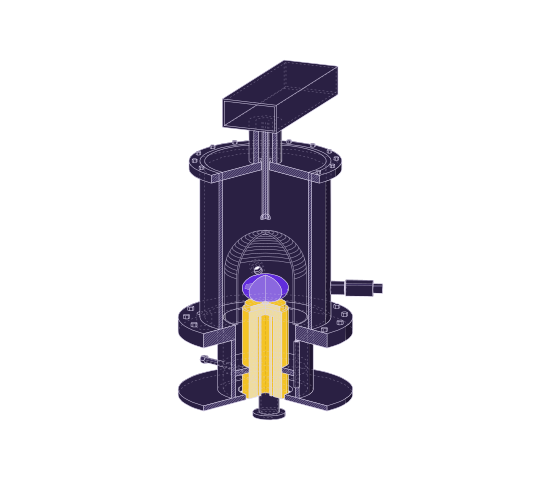
- 2.45 GHz
- Pressure
- 160 Torr
- Power
- 2 to 3 kW
- Growth
- 35 to 40 µm/h
Microwave cavity plasma reactor, Michigan State University with Fraunhofer USA. Figures from US patent 9,487,858 and application 2017/0114476. The run is shown as a time-lapse.
What we mean.
WHAT THE SECTOR COVERSProperties and process turned into a reason to switch, for the engineers who specify.
- ADDITIVE
- COMPOSITES
- COATINGS
- NEW MATERIALS
- METROLOGY
- INDUSTRIAL SENSORS
Four checks before a material is specified.
THE CHECKS ARE THEIRS · THE ORDER IS OURS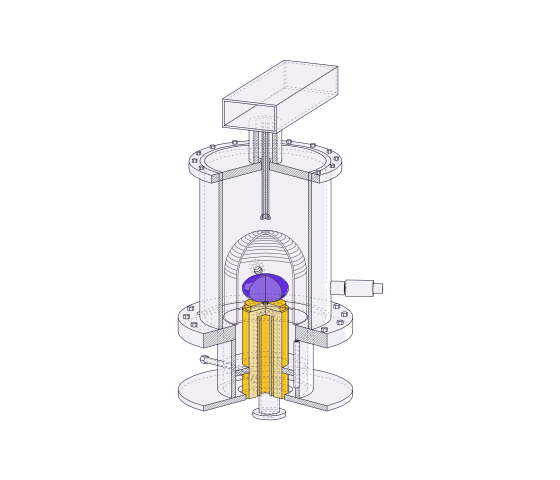
- CHECK 01 OF 04
The tests behind a value.
A structural design value is a statistical claim. A NASA paper cites a minimum of 299 samples for one kind of design value, and 897 tests for another.
SOURCE: C. A. BRICE, NASA LANGLEY, CITING THE 2003 MATERIALS HANDBOOK
ON YOUR SITEPublish each property with the number of tests behind it and the standard they were run to.
- CHECK 02 OF 04
A fixed process.
NASA's standard for additive manufacturing requires a qualified process: feedstock, build and finishing fixed, with witness specimens built alongside the parts.
SOURCE: NASA-STD-6030, APRIL 2021
ON YOUR SITEDescribe the process as fixed, with its version, not as something still being tuned.
- CHECK 03 OF 04
The laboratory.
ISO/IEC 17025 is the standard for the competence of testing and calibration laboratories. ISO says it helps a test report be accepted in another country without retesting.
SOURCE: ISO/IEC 17025:2017
ON YOUR SITEName the laboratory behind each result, and say whether it is accredited.
- CHECK 04 OF 04
The quality system, and the cost of a change.
The same NASA standard requires a quality system to AS9100 or an approved alternative. The NASA paper adds that even a minor change to the process can make the data obsolete.
SOURCE: NASA-STD-6030 AND THE NASA LANGLEY PAPER
ON YOUR SITESay what you are certified to, and what you would have to requalify if the process changed.
Five to fifteen years.
THE SECTOR IN NUMBERSSOURCE: NASA LANGLEY, UNDATED, LATEST REFERENCE 2010 · TREW MARKETING AND GLOBALSPEC, 2025
The sources lean towards aerospace and additive manufacturing. Nothing we read covers coatings or industrial sensors on their own terms.
OUR OWN AUDIT · 45 SITES, SEPTEMBER 2026
What we found on five materials sites.
Five is too few to say more.
Read the studyThe same four stages, read for materials.
ONE PACKAGE, FOUR STAGES

Brand Foundation
The switch you are asking for, stated against what the engineer uses now.


Visual Identity
Micrographs, charts and process drawings in one technique.


Web Design
A data page per material: properties, test counts, standards, laboratory.


SEO and AI visibility
Properties as tables in the page, so a search engine and a model can read them.
What materials founders ask.
NOT ANSWERED HERE?
tony@appart.giSend your site. We name the first fix.
One line about where you are going is enough. The reply comes back in writing. No call needed.
Or book a 30 minute call