SECTORS · 04 OF 07 · ENERGY AND CLIMATE HARDWARE
All sectorsBankable. Before the first plant is built.
APP/ART builds the positioning, identity and website for energy and climate hardware companies: batteries, fusion, hydrogen, grid, carbon capture, nuclear and geothermal. This page lists four things a lender or an investor checks before a first plant is financed, and what your site has to show for each.
- THE CHECKS
- Four
- DRAWN FROM
- A US study of first plants
- OUR AUDIT
- 8 sites
- NAMED NO ONE
- 3 of 8
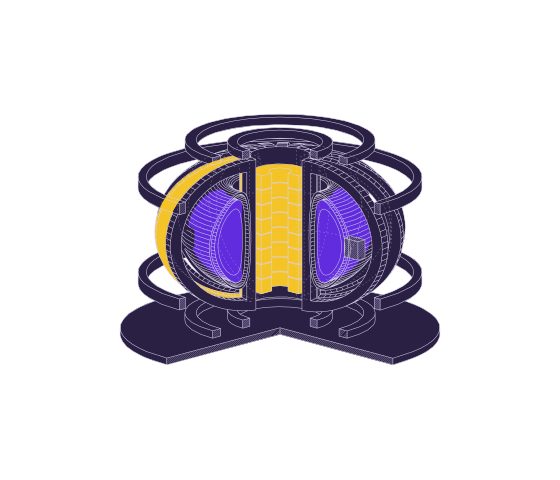
- Field on axis
- 12.2 T
- Plasma current
- 8.7 MA
- Fusion power
- 140 MW
- Flat-top
- 10 s
SPARC, Commonwealth Fusion Systems with MIT. Figures from the 2020 SPARC design papers and CFS. Fusion power and gain are projections; six coils are cut away.
What we mean.
WHAT THE SECTOR COVERSPilot results and bankable numbers, clear enough for utilities, offtakers and project finance.
- BATTERIES
- FUSION
- HYDROGEN
- GRID
- CARBON CAPTURE
- NUCLEAR
- GEOTHERMAL
Four checks before a first plant is financed.
THE CHECKS ARE THEIRS · THE ORDER IS OURS
- CHECK 01 OF 04
The readiness level.
In a US Department of Energy study of first-of-a-kind projects, project debt was typically tied to technology at readiness level 8 or 9, or moving from 7 towards them.
SOURCE: US DEPARTMENT OF ENERGY, NOVEMBER 2024 · 21 PROJECTS AT 8 COMPANIES
ON YOUR SITEState the level, the plant or test that earned it, and for how long it has run.
- CHECK 02 OF 04
A plant someone can visit.
Investors and customers in the same study valued an operating reference plant. Customers buying a licence typically wanted to see one first.
SOURCE: THE SAME STUDY
ON YOUR SITEShow the plant: where it is, what it produces, since when.
- CHECK 03 OF 04
The independent engineer.
A lender appoints an independent engineer to check the technology on its behalf. In one solar example the scope covered factory audits, qualification tests and accelerated lifetime tests.
SOURCE: THE SAME STUDY, AND AN NREL WORKSHOP ON SOLAR, 2017
ON YOUR SITEName the independent reviews you have had, and what each covered.
- CHECK 04 OF 04
The guarantees.
Some offtake contracts in the study carried uptime guarantees. Lenders expected contingency of 25 to 30 percent of final cost, and checked that the technology licence survives a change of control.
SOURCE: THE SAME STUDY
ON YOUR SITESay what you guarantee, and who stands behind it.
One of nine got project debt.
THE SECTOR IN NUMBERSSOURCE: US DEPARTMENT OF ENERGY, OFFICE OF CLEAN ENERGY DEMONSTRATIONS, NOVEMBER 2024 · CASE STUDIES, NOT A SURVEY
The study is about financing demonstration plants. Nothing we read is specific to fusion, hydrogen or geothermal.
OUR OWN AUDIT · 45 SITES, SEPTEMBER 2026
What we found on eight energy sites.
Eight companies is a small sample: read the pattern, not the number.
Read the studyThe same four stages, read for energy.
ONE PACKAGE, FOUR STAGES

Brand Foundation
One claim a lender, an offtaker and an engineer can each repeat.


Visual Identity
Plant, process and data drawn in one technique, so a pilot reads as a plant.


Web Design
A page for the reference plant, with its numbers and the reviews behind them.


SEO and AI visibility
Capacity, running time and dates as text, so a model can quote them.
What energy founders ask.
NOT ANSWERED HERE?
tony@appart.giSend your site. We name the first fix.
One line about where you are going is enough. The reply comes back in writing. No call needed.
Or book a 30 minute call